Linda Toote is a...
1. G-I specialist who specializes in flatulence
2. flutist
3. service technician for a horn company
Linda Toote is a...
1. G-I specialist who specializes in flatulence
2. flutist
3. service technician for a horn company
Steve Small is a...
1. dwarf
2. nanotechnology expert
3. human development specialist
The answer is on the bottom of this page.
3. Steve Small is a human development specialist.
At the end of World War II, my father had to decide whether to kill a German soldier. In 30 seconds back in 1989, he described the situation to me.
I enjoyed speaking to Madison West Rotary today about the crazy world of aptronyms, i.e. apt names. It runs about 15 minutes. They were good sports! Check out the audio player below.
Shari Skinner is a:
1. dermatologist
2. poultry factory worker
3. sun screen company spokesperson
4. cosmetologist
We had a speaker at our Madison South Rotary club meeting yesterday refer to Don Rumsfeld's famous quote about what we know and don't know. Honestly, I couldn't quite follow his point because there were just too many "knowns" and "unknowns" rapidly thrown into his sentences! In any case, take a look at the Rumsfeld quote below or watch it here:
"Reports that say that something hasn't happened are always interesting to me, because as we know, there are known knowns; there are things we know we know. We also know there are known unknowns; that is to say we know there are some things we do not know. But there are also unknown unknowns - - the ones we don't know we don't know. And if one looks throughout the history of our country and other free countries, it is the latter category that tend to be the difficult ones."
Donald H. Rumsfeld, Department of Defense news briefing, February 12, 2002
Wouldn't it have been easier for Rumsfeld to say there are things we know about and things we do not know about? And, there are things we cannot predict (unknown unknowns). This last one is the phrase I have the most trouble with, but the whole quote is a complete disaster in my opinion.
The British Plain English Campaign agreed with me, having awarded the Defense Secretary its Foot in Mouth award.
A better twist on this is something I read that describes four kinds of people who live in the world:
1. Those who know and know they know. (experts)
2. Those who know, but don't know they know. (They rely on good evidence and experts but don't personally gather it or have such expertise).
3. Those who don't know, and know they don't know. (liars)
4. Those who don't know, and don't know they don't know. (gullible, lazy people)
#4 is the scariest of all.
1. Orchestra fund raiser
2. Washes skyscraper windows
3. Deep sea fisherman
The answer appears at the bottom of this page.
Answer:
Death is a fascinating topic, and one Dr. Sam Parnia takes very seriously. His book, Erasing Death, opens with a very hopeful narrative describing how patients who are clinically dead are in fact brought back to life. He says all those people who perished on the Titanic 100 years ago would have been excellent candidates for resuscitation under modern medical techniques, which include the cooling of the body to preserve brain function.
But Parnia, a resuscitation medicine specialist, says medical science is in the infancy of standardizing treatments for people who suffer a reversible death. One's chances will depend on what hospital he is taken to, what physicians happen to be practicing that day, their level of training, what equipment might be at their disposal, etc. Astoundingly, people who have been clinically dead for hours can be brought back to life with minimal or no brain damage if the medical issue that caused their death (a clot, for instance) can be repaired in time and their bodies were properly cooled in the meantime.
While Parnia's book spends a lot of time discussing how this can be achieved and the tremendous potential for reviving stricken patients, he also delves into an area that can only be described as the spiritual or supernatural. And that is the other side of this topic. There is a growing population of people who were once "dead" who are able to describe what that death experience was like. He tells of patients who are clinically dead, meaning they have no pulse, their hearts have stopped and their pupils become dilated because there is no longer blood circulation. So how can they possibly describe anything after they are revived?
Before we get to that, Parnia describes circumstances where patients can recount what was said in the OR and by whom while they were dead. Uncannily, many tell a similar story of floating above their bodies while medical personnel work on them. This has occurred across cultures, ages, religious beliefs and even among atheists. The case I found particularly amazing is that of a young boy who was dead and later told of a kindly woman who helped him while he was dead. When asked who this was, he had no idea. His mother then showed him a picture of his deceased grandmother that he apparently had never met and he said that was the lady!
Others in this unique fraternity of survivors have also described deceased relatives at their side or the presence of heavenly being. Parnia has no explanation for this from a scientific standpoint so he has begun a study involving the experiences of people who have been dead. He says only 10% or so of those who've been brought back have any memory of the experience. But among those who do, their recollections are incredibly similar.
This book makes a strong case for the self or the soul continuing on after death, which is exactly what happens to brain cells. That is not science fiction. When we die, our bodies don't completely die immediately. The brain cells linger on for a while, especially when the body is cooled, even though the heart has stopped. What happens in this interim period is what makes for great dinner conversation.
OK, wacky word fans. I'm reading a great book now, which mentioned this notable person: His name is John Freese.
What is he credited for doing? Your choices are below:
John Freese...
1. Invented the Icee drink.
2. Helps wrongfully convicted inmates.
3. Pioneered the cooling of cardiac arrest patients to preserve brain health.
The answer is at the bottom of the page.
The correct answer is #3. John Freese, MD, pioneered the cooling of cardiac arrest patients, so once revived, they are much more likely to have intact brain function. The book is Erasing Death by Sam Parnia, MD. I'll blog about it when I am finished reading it.
So in addition to the names in my book, Wacky News Names, I am going to post one new name I've discovered each Wacky Wednesday. However, you will have to guess why he or she made the list. So here goes, the first entry is...
A humor book by Stephen J. Busalacchi
1. He won a typing contest.
2. He is a race car driver
3. He was arrested for driving too slowly
Ronald Reagan's legacy must include his influence in bringing down the Berlin Wall, the re-unification of Germany and the end to the Cold War with the Soviet Union. The Rebellion of Ronald Reagan by James Mann, a former foreign correspondent for the Los Angeles Times, documents the President's ability to stick by his instincts, even though his "experts" were always skittish.
Mann also does an admirable job of giving the reader an inside look at how foreign policy was conducted between Reagan and Mikhail Gorbachev, sometimes using an American author as an informal intermediary. This drove the State Department crazy, but Reagan liked Suzanne Massie's books and her take on what was happening inside the Soviet Union. His relationship with Massie and the extent of her influence were certainly extraordinary.
What I enjoyed most about The Rebellion of Ronald Reagan is how it delves into Reagan's knack for reading people and seeing things that others in his sphere couldn't fathom. The hawkish members of his administration had no faith in Gorbachev being any different than the Soviet leaders before him and they always argued a hard line, as did former president Richard Nixon.
Reagan, however, could see that Gorbachev was different and he began to ease off his "evil empire" rhetoric and worked with the Soviet leader. Reagan wasn't an academic or foreign policy specialist, but he understood people. He used stories to communicate, often unsuccessfully. But the guy was not called the "Great Communicator" for nothing. Nevertheless, Mann gives Mikhail Gorbachev most of the credit for the Cold War's end.
"Unquestionably, Gorbachev played the leading role in bringing the four-decade-old conflict to a close. Yet Reagan, overcoming considerable opposition of his own at home, played a crucial role by buttressing Gorbachev's political position," Mann concludes in his book.
Another aspect of the book I loved were interviews in recent years with Gorbachev, East German leaders, foreign policy specialists from the Reagan Administration and others who were directly involved in this drama. These interviews provided rich context for understanding what had transpired and who deserved the credit for the successes.
The Rebellion of Ronald Reagan worked for me because it was so smartly written in a journalistic, easy-to-read, even-handed style. It does not come off as a boring text book, despite its heavy content. In presenting this narrative, President Reagan is neither glorified nor crucified, so he emerges as a very human figure who was in the right chair at the right time, at least when it came to US-Soviet relations.
James Hoyt, a University of Wisconsin emeritus journalism professor, delivered a sobering critique of both modern journalism and the "news" consuming public during a Madison South Rotary luncheon today.
"The public doesn't care about sources as much as you and I do," lamented Professor Hoyt, a Hall of Fame inductee of the Wisconsin Broadcasters Association. "We often have no idea how carefully or recklessly the information has been gathered," he said.
Too many news organizations carry stories "second-hand," according to Hoyt, which originate from sources which provided content that is "politically loaded...less for information and more for ammunition." And he says we as consumers are often guilty of seeking out such content because it satisfies our viewpoint. Rather than seeking facts from trusted journalists, Hoyt says more of us are going to sources of information that provide one side of the story.
Such news content competition now comes from more sources than ever...which "creates a huge dilemma for the established media," says Professor Hoyt. Websites, bloggers, Twitter, Facebook and other sources are just a few examples. He says media outlets tend to run stories initiated by sources that do not meet their own journalistic standards because the information is so ubiquitous they feel obligated to report it.
An example of such sources, according to Hoyt, are commercial talk radio broadcasters, whom he refers to as "radio entertainers," rather than journalists. For the audiences they serve, he says "fairness can actually get in the way." For these talkers, all that matters is that they attract enough advertising dollars. Offering both sides of an argument is not required or needed for their programs to thrive.
On the other hand, Hoyt praised public broadcasters for going to great lengths to provide context, balance and a thorough discussion of the issues. But unfortunately, he says a relatively small portion of listeners and viewers are availing themselves of public broadcasting content.
News makers are not immune from these enormous changes in the media landscape, either. Hoyt mentioned Madison's Mary Burke as example of what has happened with news sources in the modern age. Today the Madison School Board member announced via YouTube that she is running for Wisconsin Governor.
Public figures don't make announcements as often at news conferences any more, but instead avoid any pointed questions from journalists by simply releasing a statement or video directly to the public via social media, according to Hoyt.
"More and more politicians are going it alone," Professor Hoyt says, and essentially ignoring mainstream journalism. Why run your message through a skeptical press when you can bypass them?
"A balanced and thorough story will create enemies," Hoyt explains, and that appears to be hindering sound reporting today.
The answer to all of these weighty issues is not clear, according to Hoyt. But as consumers of information, be it found on the front page of a major newspaper or via YouTube, Hoyt strongly recommends we all consider the source of that content.
When we lack a common foundation based on fact rather than assertion, it becomes increasingly difficult to have a productive conversation. Perhaps today's political stalemate in Washington, D.C. is the most obvious example of what havoc can result when so many citizens are largely misinformed.
One might also wonder whether the state of journalism has anything to do with Wisconsin's curious electorate, which voted for liberal Tammy Baldwin and conservative Ron Johnson for Congress, while also supporting President Obama and Governor Scott Walker.
This is one fantastic story that will make you think about what it means to be human. I listened to it on my walk today, courtesy of Story Corps from NPR. In just two and a half minutes, this 65-year-old California guy explains why he goes out of his way to help stranded motorists.
I listened with awe and admiration to pop legend Elton John, as he revealed so much about his incredible life in an interview with Terry Gross of NPR's Fresh Air. He touched on the fact that he can't write lyrics, suffered from addiction, became isolated because of the fame and how he has come to enjoy family life with his partner.
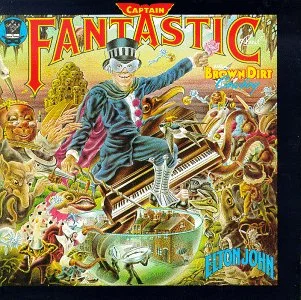
As a 15-year-old, the first album I ever bought was Captain Fantastic and the Brown Dirt Cowboy. In fact, I still listen to it occasionally and still love it. At age 66, John is still making music, his latest, the Diving Board. Gross played multiple tracks and John's voice sounds as vibrant as ever, especially since this is a quieter, reflective John.
When I saw Elton John at the Dane County Coliseum in 1980 during my first month of college at UW Madison, I was just struck at how many adoring fans this guy had. He was in the center of the darkened venue seated at his piano, illuminated by spotlights. I just tried to imagine what it was like to be the center of such adoration.
In the interview, John describes how fame affected him, made him "self-absorbed."
"And I had no balance in my life, Terry. I was, you know, this one person onstage and this person offstage, who really didn't know much about living. I had progressed on stage as a performer, but I hadn't progressed as a human being."
He says after he got sober in 1990, he was able to get back on track, develop a healthy relationship and eventually moderate his performance schedule. Before that, he describes superficial relationships that didn't work out.
"And, you know, you take them around the world, you buy them a Versace shirt and a Cartier watch and then within six months they hate your guts because they have no life. And I did that repeatedly, time and time again. I had to learn how to share, how to take part in a proper relationship. And since that, I've been 23 years now clean and sober, and the most amazing things have happened to me. So it was just, it was a - the '90s were a great time, it was like I became alive again, I functioned and it was terrific."
But John says he needed to go through all of that to find the content place he occupies today. He loves being home so much that he will fly back to be with his kids and partner even if he is playing consecutive concerts in the same city.
The other relationship he discussed was that with Bernie Taupin, his longtime lyricist. As a non-musician, it was fascinating to hear how these two develop songs together.
"I realized at an early age - or when I tried to write songs, that I wasn't very good at it. And, you know, I enjoy the process of writing to his lyrics, and the weird process of him giving me a lyric, me going into a studio, and never writing with him in the same room. It's a magical event."
It sounds as though everything starts with Bernie, and John is fine with that. "He's a very - always been a very cinematic storyteller in his lyrics. There's a visual side. As soon as I look at the lyrics, visually, I can see what's going on. And I don't know how it works, Terry. It's kind of a bit "Twilight Zone"-ish, to say the least.
But it has worked, and it's as interesting now and as fun now as it was when I first wrote the first song to his lyric, because that excitement of writing something, say, off "The Diving Board" like "The Diving Board" or "My Quicksand," or whatever, and then seeing his reaction has never, ever dimmed. It's always been as exciting as it was in the first - when I wrote the very first song.
So it's an odd - it's a really odd relationship."
I've downloaded select songs from the net over the years but am yet to really embrace the transformation to mp3 music. I still listen to CDs. But appropriately, The Diving Board will be my first downloaded album.
Brace yourself, as a tidal wave of Alzheimer's disease cases are on the horizon. "It's going to overwhelm our country and the world," says Kim Petersen, MD, a geriatrics specialist and board member for the Alzheimer's & Dementia Alliance of Wisconsin.
"Thirty million U.S. baby boomers will get it," adds Dr. Petersen. The disease is strongly correlated with age, as half of those age 85 and older have either Alzheimer's or another memory disorder known as mild cognitive impairment (MCI). The earlier these problems are diagnosed, the better able doctors will be positioned to help.
Signs of Alzheimer's Disease include difficulty learning and retaining information, language problems and motor memory changes, such as the inability to dress oneself.
Three kinds of medication have been found to be helpful by delaying the progression of the disease, but the drugs don't work for everybody. When they do, the medicine delays the worst of the inevitable.
"The end point is the same but function is better," explains Dr. Petersen.
It can be difficult for laypeople to figure out when memory problems are serious or just part of the aging process. Doctor Petersen says if you forget where you put your keys or where exactly you parked the car, that's not something to fret over. But if you walk home after having driven your car, then you need to make a doctor appointment.
"We become less efficient and flexible and don't multi-task as well as we age," says Dr. Petersen. Forgetting appointments or having had a conversation could be signs of MCI. And that can be a "precursor to Alzheimer's," says Dr. Petersen. While there is no treatment for MCI, doctors can monitor the patient to see if further decline occurs. Sometime it does and sometimes MCI just clears up if it's related to some other health issue like depression or a medication.
Doctor Petersen says the future will likely include baseline tests so doctors can see whether a patient's memory has indeed declined compared to an earlier period. When asked what can be done to lower one's risk of suffering memory decline, Dr. Peterson said, "Take care of your heart and blood vessels. Lower your weight and increase cardiovascular health." That includes avoiding diabetes and high blood pressure, too.
The doctor also challenged us to keep using our brains as we age. "Learn something hard, like a foreign language. Go back to school. Stimulate the neurons," Petersen suggested.
But staving off Alzheimer's disease also means remaining social in our later years. Isolation can be a serious problem, so ditch the computer more often and visit with friends, attend a Rotary meeting and volunteer at the Brat Stand!
September 12, 2013 was a perfect, clear summer afternoon and a great day for a walk. It was nearly my last.
Goldie and I are on the corner of High Point and Old Sauk Roads waiting for the walk light. It flashes, the intersection is clear, and away we go. A few steps out, I notice a silver car moving quickly toward the intersection to make a left turn. But she doesn't appear to be slowing down so I did a quick back step with the dog, just in case. In a second or two the gray-haired elder sped right through the crosswalk at full speed! I stared at her as she proceeded through the crosswalk, aghast at what had just transpired. During this moment, we locked eyes. Her expression was one of bewilderment: What on earth is your problem?
Back safely at the curb, I stood there for about two minutes thinking about what just happened and how I almost bought the ranch. I wrote down her three-letter license plate number, car description and time on my phone notebook so I could accurately report what happened.
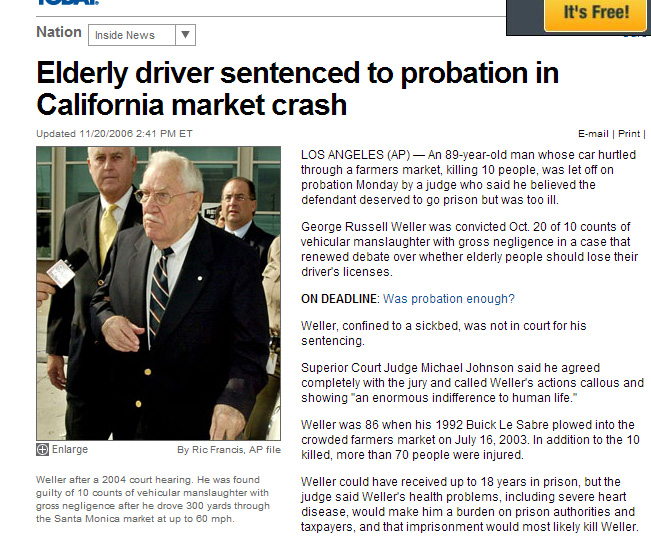
Had I not moved backward, I am certain she would have killed me at that rate of speed. You read about these elderly folks who hit pedestrians and they say they didn't notice anything was amiss until impact. That would have been my fate on this day.
My friend Jay, to whom I told this story, said, "Wouldn't you have at least been able to jump up so you would have hit the windshield?" Who knows what I might have done or been able to do instinctively, holding a leash, just prior to impact. But as a best case scenario, imagine getting smacked into the windshield by a car going 30 MPH, going airborne and landing on the asphalt. Probably better than getting run over, but not by much. Perhaps I would only suffered a broken neck or back.
I did report this incident to the police, my city council member and legislators. There is a bill pending from State Senator Fred Risser which would require more testing for drivers over age 75. There are no special rules related to age for drivers in Wisconsin now. Under Risser's bill, the elderly would have to get tested every four years instead of every eight and they'd also have to pass a skills test. This is a perfectly reasonable proposal, yet the AARP opposes it because it's discriminatory. I can't fathom what an elderly person who is clear-minded has to fear. If you're so convinced you're mentally sharp enough to drive, just prove it with a simple test.
The fact is the older we get, the greater our chances of having difficulties behind the wheel. Crashes among the elderly are on par with the unusally high rates of inexperienced teen drivers.
"Vision, hearing, motor skills, and reaction times do tend to decline as a person ages, whether because of the aging process itself or because of the increased incidence of diseases such as arthritis, glaucoma, and others during advanced age," according to Wisconsin Briefs, published by Wisconsin's Legislative Reference Bureau.
Guess what folks? We're going to see way more of this. Way more. The Wisconsin DOT projects that by 2025, one in five Wisconsin residents will be age 65 or older. What's most alarming, according to the Milwaukee Journal Sentinel, "Motor vehicle crash deaths per capita among men and women begin to increase markedly starting at ages 75 to 79," according to U.S. Department of Transportation statistics from 2009."
I've experienced this elder driver problem in multiple other ways, too. An older friend gave me a ride home from downtown Madison to the west side and during that trip, he nearly went right through a stop sign, almost hit a pedestrian on a street with a lot of construction going on and a couple of other less obvious infractions. It was one scary ride!
I also recall exiting a church after a friend's wedding and heard the squealing of tires as an elderly woman backed up at a high rate of speed right into one of the parked cars. Had somebody been behind her, there would have been a funeral. She apparently jammed the accelerator instead of the brake pedal.
This issue also has affected my own family. My late father was struggling in the final years of his life and everybody in my family agreed it was not safe for him to drive any more.
"You don't think I'm a good driver?" Dad asked me sincerely. "It's not your fault," I told him. "You've got some health problems that are preventing you from driving safely." In a good moment, I was able to convince him to voluntarily surrender his license.
But we neglected to take the keys away while we figured out what to do with his car. A short time later, Dad showed up at my sister's house about eight miles away. He had forgotten all about giving up his license and just hopped in the car and drove there—without auto insurance, mind you.
From that point on, he blamed me for taking away his car and it was a small rift between us. It's not an easy conversation to have with anybody because the perceived loss of independence is paramount for an older person. Nevertheless, impaired drivers have to stay off the road.
Learn more about the problem and don't be shy about contacting the police and/or the DOT if you experience or witness something like this. Please also consider contacting your state legislators and encourage them to support Senator Risser's bill.
One day you or a family member might be the one in the crosswalk with a car barreling toward you.
If anybody knows customer service, Jon Callaway does. "I work with people who generally are not happy," explains Jon.
As a Senior Local Relations representative for American Transmission Company, he understand that nobody will be pleased about power lines going through or near his or her property. Nevertheless, Jon says his goal is to hear out customers and treat them respectfully.
"My goal is always to make the customers happier or put them in a better position compared to when the call started," he said. To be good at customer service, Jon says you really need to be a "people person." Excellent training can be found in any bar or restaurant because Jon says you have to deal directly with the customer whether you are responsible for any problems that arise or not.
He recommends trying hard to listen and be empathetic. He emphasizes that it's essential to treat people respectfully, even when they don't return the favor. The customer is not always right but Jon says the "majority of bad customers have no clue that they are bad customers." They may be under great stress by the time your paths cross.
No matter what kind of work we do, with direct or indirect customer contact, Jon contends customer service always plays an important role. He says just a little effort in this area can make a big difference for the people affected by your work.
"You don't need to do that much to be above average," says Jon. In that vein, he likes to quote pro football great Roger Staubach who said, "There are no traffic jams along the extra mile."
It came again this week. The dreaded call from a computer that has linked me to somebody I don't know and have never met.
"We are trying to reach Ann...Call this number immediately..." It's from some company supposedly named MCS. I Googled it and lots of people complain about the annoying calls it makes but nobody seems to know what the heck kind of company it is.
This has been going on for about a year or so. One of the not-so-pleasant aspects of working from home is having to screen all of the marketing calls. This one is dialed from a computer and frequently left on our answering machine. About three months ago I did call back to tell this company I have no connection to this person and don't understand why I keep getting these calls. The person tells me she will remove my name from the list, but offers no other information.
It stops, but then in no time, it resumes a couple of times per month. I called the number again yesterday, hoping to end this nuisance. Given that the calls started again after broken promises the first time, I threatened to contact the PSC and the Consumer Protection Department if the calls continue. "Do what you have to do, Sir," the rep deadpans. That was enough for me to contact the State now.
I followed up on my threat with Wisconsin's no-call center, which we did sign up for. But I may have done exactly the wrong thing by returning the telemarketer or collection agency's call. I got a comprehensive return email from the State of Wisconsin with this advice:
"We suggest that you not answer the calls if possible, do not enter numbers they suggest to "speak to a rep" or "get removed from their calling list", as these too are scams to verify if your number is valid so that they can sell to other telemarketers. This can inundate you with more calls."
Great. But I'm not sure this is a telemarketer. I Googled my home phone number and this person's name they keep asking me about and voila! This lady, Ann, had my home phone number before I did, which is going on more than 20 years ago. She must owe some serious cash. I found out Ann's had 11 residences and is 46 years old. There is a current phone number for her, but I can't imagine she's answering it because all of her annoying calls are coming to me.
Dead just ain't what it used to be. Doctor Sam Parnia describes how people deceased for as long as 90-minutes, and sometimes even a few hours, are brought back to life. Sound impossible? This truly is amazing because the patients he describes have no pulse, can't breath and are flat lined as confirmed by medical equipment. In fact, at this point they are corpses.
What's different about the survivors is that their bodies were cooled, preserving their brain cells, which die at a much slower pace. If the emergency medical team can correct the underlying issue that caused their death, i.e., a blood clot that caused the heart attack, they can sometimes bring them back to life.
This doctor is a gifted story-teller who describes complex issues in a very understandable way. In fact, it's one of the best medical interviews I've ever heard. This discussion also includes how some patients who are dead are able to recall conversations the medical team made trying to revive them.
Doctor Parnia's book, is Erasing Death, which I plan to read. Check out the interview from the People's Pharmacy, which airs on public radio.
http://www.peoplespharmacy.com/2013/09/07/916-reversing-death/
The girls and I enjoyed an interesting experience at a local car dealership, following a contest brochure we received in the mail. We scratched the circles and matched three $25,000 symbols, proclaiming that we "won."
I explained to the girls that there was almost no chance that we won anything of value and that this was just a scam to get us into the dealership to buy a car. "But maybe it's a good scam," Olivia offered, as she and her sister continued to urge me to call the number and find out what we won.
Fine, I called, and the person who answered confirmed that we were a "winner," but that we would need to go to the dealership to claim our prize. On the inside of the glossy brochure, they featured an iPad, wads of cash, a new car, etc. I asked what was the least valuable "prize" we might have won. She declined to elaborate.
The girls insisted we go down there and find out. Maureen was out of town so I figured it would be a good learning experience to show them how marketing works, especially since the dealership was right near our house.
So we drive up and we see all these couples wandering around the lot, some with kids, carrying this brochure. Lots of winners, apparently! Shocking. I asked one gal what she won and she showed me a $2 bill. "You were right!" said Olivia. Actually, I did say we probably won two bucks.
We proceeded in nonetheless and within a few minutes a sales guy introduces himself and has us sit down by a desk. He needs some information before he can check on our prize. He was an older gentleman with a very friendly personality and not nearly as pushy as I imagined. He wants to know what cars we have now, how old they are, how many miles, my birth date (declined), etc.
Since he had no luck with convincing us to buy a car right then and there, he had to send in reinforcements. The next guy made his pitch, quite respectfully, but more insistent. While he's talking to me, Olivia, clad in dark sun glasses long past sunset, blurts out: "We're not buying a car." The guy just glared at her. Funny! In fact, the girls reenacted the scene during breakfast this morning.
Twenty minutes later, Olivia gets to put the key in the magic car door. If the door opens, we get the car. [Buzzer sound] OK, on to the prize we won. Our number matches a lottery ticket, which we must scratch. [Buzzer] Finally, the sales guy pulls out a wad of bills and places a $2 bill in Olivia's palm. Hey, this was worthwhile! I gave Serena $2 so they could each "win."
We were there anyway, so I said I'd be willing to look at a KIA sedan. I was curious because I know absolutely nothing about that brand. The girls were not happy about this and at one point, Olivia says, "We better go because we have to pick up mom." Interesting, how she instinctively knew to tell a white lie to get out of a sales situation. Serena is too young, though. She blurted out, "No, we don't!"
Ultimately, we chose not to spend $32,000 on a whim and we came back $24,998 short of what the brochure seemed to suggest we had won. All in all, not the worst way to teach your kids about the world.